
The Colossus
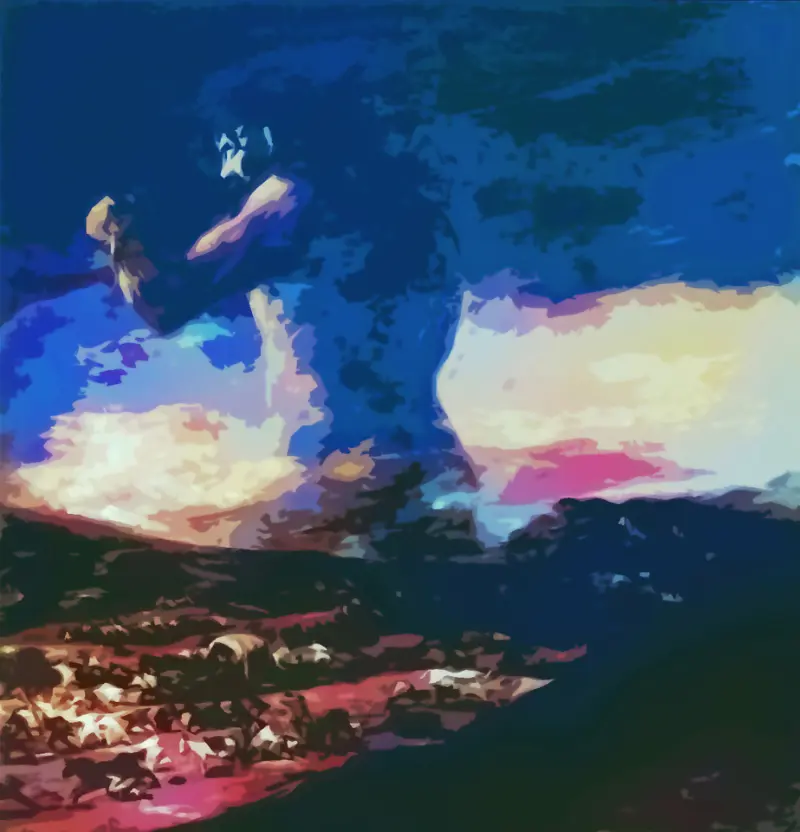
Dating from 1808, and alternately known as The Giant, The Panic, or The Storm, this work transcends the academic disputes surrounding its authorship to assert itself as an indelible visual force.
Its visual potency resides in its capacity for polysemic interpretation, shifting dynamically according to the historical vantage point from which it is observed. The towering figure dominating the landscape has been decoded variously: as a sentinel against foreign incursion, as a grim allegory of warfare and its devastation, or as the sheer embodiment of collective panic.
It is precisely this polysemy that transforms the canvas into a temporal mirror. During the Napoleonic incursions, it was read as an emblem of resistance; in contemporary conflicts, it resonates as a stark indictment of the systematic violation of sovereign rights and the vulnerability of populations subjected to hegemonic forces.
From a curatorial standpoint, the piece exemplifies how images are never tethered to a fixed historical coordinate. Instead, they are continuously reactivated, accruing new semantic weight each time they are brought into confrontation with present realities. The Colossus is not merely a mythological entity; it is the visual materialization of crushing power. It articulates the visceral dread societies experience when confronted with overwhelming forces, and the profound diminishment of the individual in the face of macroscopic conflicts that dictate their destiny.
This work possesses an enduring capacity to engage in dialogue with diverse paradigms of domination and resistance. It proves that monumental images are never exhausted by their epoch of creation; rather, they undergo continuous metamorphosis with every new gaze that projects its own reality, its own dread, and its own struggle onto the canvas.
Thus, The Colossus perfectly embodies the core tenet of the Generative Gaze: the reality of the artwork is not sealed upon the canvas. It is continuously actualized with every act of observation, revealing latent meanings that remain dormant until summoned by the specific historical context and the perceptual sensitivity of the viewer.
Size:
41.33" x 39.37"
Technique::
Oil on canvas.
The Colossus
Dating from 1808, and alternately known as The Giant, The Panic, or The Storm, this work transcends the academic disputes surrounding its authorship to assert itself as an indelible visual force.
Its visual potency resides in its capacity for polysemic interpretation, shifting dynamically according to the historical vantage point from which it is observed. The towering figure dominating the landscape has been decoded variously: as a sentinel against foreign incursion, as a grim allegory of warfare and its devastation, or as the sheer embodiment of collective panic.
It is precisely this polysemy that transforms the canvas into a temporal mirror. During the Napoleonic incursions, it was read as an emblem of resistance; in contemporary conflicts, it resonates as a stark indictment of the systematic violation of sovereign rights and the vulnerability of populations subjected to hegemonic forces.
From a curatorial standpoint, the piece exemplifies how images are never tethered to a fixed historical coordinate. Instead, they are continuously reactivated, accruing new semantic weight each time they are brought into confrontation with present realities. The Colossus is not merely a mythological entity; it is the visual materialization of crushing power. It articulates the visceral dread societies experience when confronted with overwhelming forces, and the profound diminishment of the individual in the face of macroscopic conflicts that dictate their destiny.
This work possesses an enduring capacity to engage in dialogue with diverse paradigms of domination and resistance. It proves that monumental images are never exhausted by their epoch of creation; rather, they undergo continuous metamorphosis with every new gaze that projects its own reality, its own dread, and its own struggle onto the canvas.
Thus, The Colossus perfectly embodies the core tenet of the Generative Gaze: the reality of the artwork is not sealed upon the canvas. It is continuously actualized with every act of observation, revealing latent meanings that remain dormant until summoned by the specific historical context and the perceptual sensitivity of the viewer.
Size:
41.33" x 39.37"
Technique::
Oil on canvas.